
3. Configure your first object storage
Launch Administration console
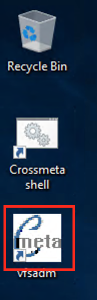
Launch vfsadm Administration Console from the shortcut link in Desktop and Run as Administrator
Expand the Cloud Disks in the tree view pane to reveal the following management options
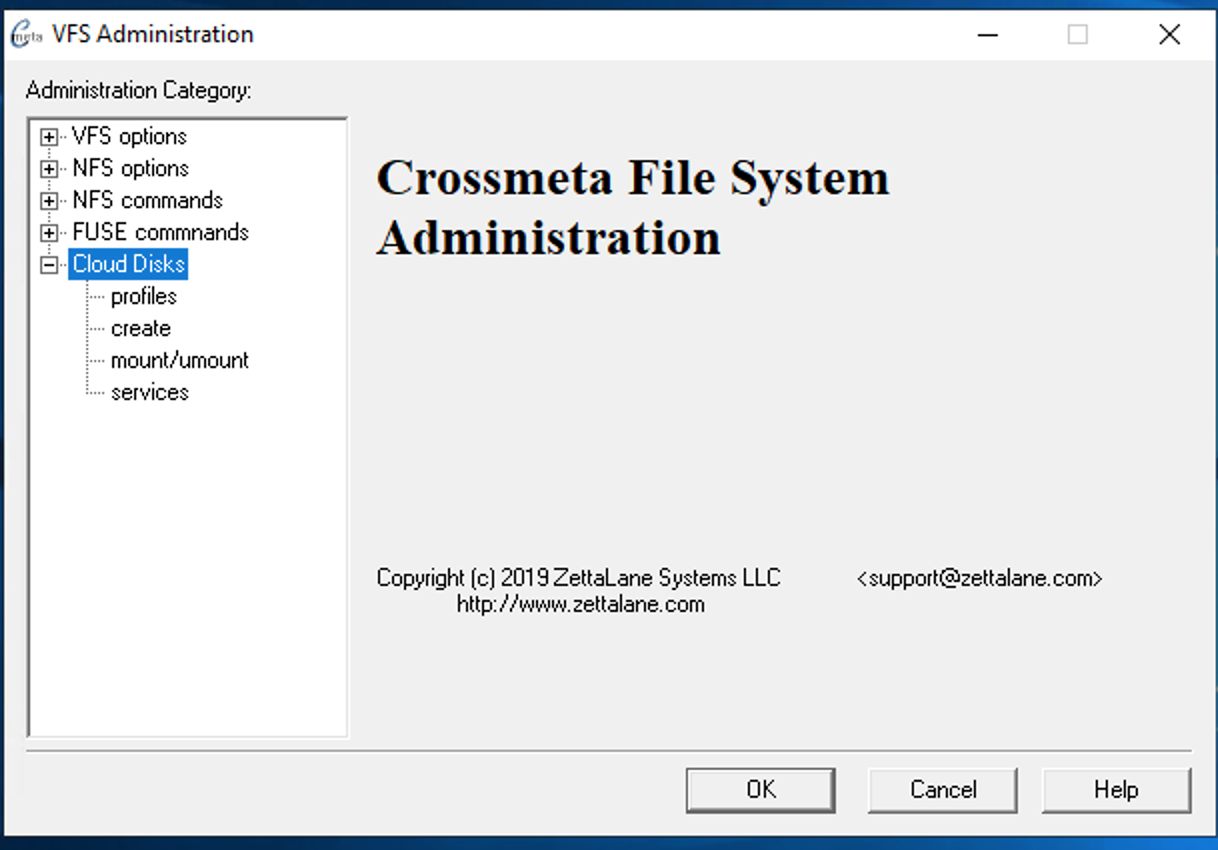
3. Create Cloud Profile
Use profiles → New to create a cloud profile that provides relevant information for accessing the cloud storage from application. To start with the configuration you would need access
List buckets with objbaker
Before configuring object disk with Windows, make sure objbaker can list the buckets from your storage account. The baseURL is the most important parameter and should match with access URL of the cloud provider. You should use HTTPS for secure SSL access.
| Info | ||
|---|---|---|
| ||
For Azure baseURL will contain the <storage-account-name>.blob.core.windows.net The baseURL should end with slash character / The baseURL option can be skipped for Amazon AWS alone |
| Code Block | ||||||
|---|---|---|---|---|---|---|
| ||||||
C:\Program Files\crossmeta>objbacker.exe  --cacert=ca-bundle.crt --ssl  --accessFile=/etc/.s3azure_passwd
--s3Type=azure --baseURL=https://zfstest.blob.core.windows.net/ --bucketCommand=list |
| Code Block | ||||||
|---|---|---|---|---|---|---|
| ||||||
C:\Program Files\crossmeta>objbacker.exe  --cacert=ca-bundle.crt  --ssl --accessFile=/etc/.s3amazon_passwd
--bucketCommand=list |
| Code Block | ||||||
|---|---|---|---|---|---|---|
| ||||||
C:\Program Files\crossmeta>objbacker.exe --cacert=ca-bundle.crt --ssl  --accessFile=/etc/.s3google_passwd
 --s3Type=google_s3  --baseURL=https://storage.googleapis.com/   --bucketCommand=list
|
| Code Block | ||||||
|---|---|---|---|---|---|---|
| ||||||
C:\Program Files\crossmeta>objbacker.exe  --cacert=ca-bundle.crt --ssl  --accessFile=/etc/.s3wasabi_passwd
--baseURL=https://s3.us-west-1.wasabisys.com/ --bucketCommand=list |
Configure object storage as VHD
Before configuring object disk with Windows make sure the Crossmeta Fuse driver has started. If required start the driver as follows| Code Block | ||||||
|---|---|---|---|---|---|---|
| ||||||
C:\Program Files\crossmeta>net start cxfuse
The CROSSMETA FUSE kernel mode driver service was started successfully.
|
Create access file with credentials
Create file v:\etc\.s3wasabi_passwd using notepad and add the access information in this format accessId:accessKey. The accessId could be account ID, and the accessKey is base64 encoded secret.
| Info |
|---|
By starting filename with dot you would avoid Windows adding any .txt extension to the above file. Also make sure there are no extraneous characters or newlines in this file. This file is accessed by Crossmeta programs as /etc/.s3wasabi_passwd, while WIN32 programs access as v:\etc\.s3wasabi_passwd |
For SSL to work the curl library needs to know the location of its CA CERT bundle, which is installed in c:\program files\crossmeta. When you run the objbaker this information is provided with --cacert=ca-bundle.crt option . While running interactively since the startup directory is c:\program files\crossmeta this would work. But when the program is running as NT service the startup directory would be c:\windows\syswow64. In that case either copy ca-bundle.crt to c:\windows\syswow64 or specify full pathname to --cacert option.
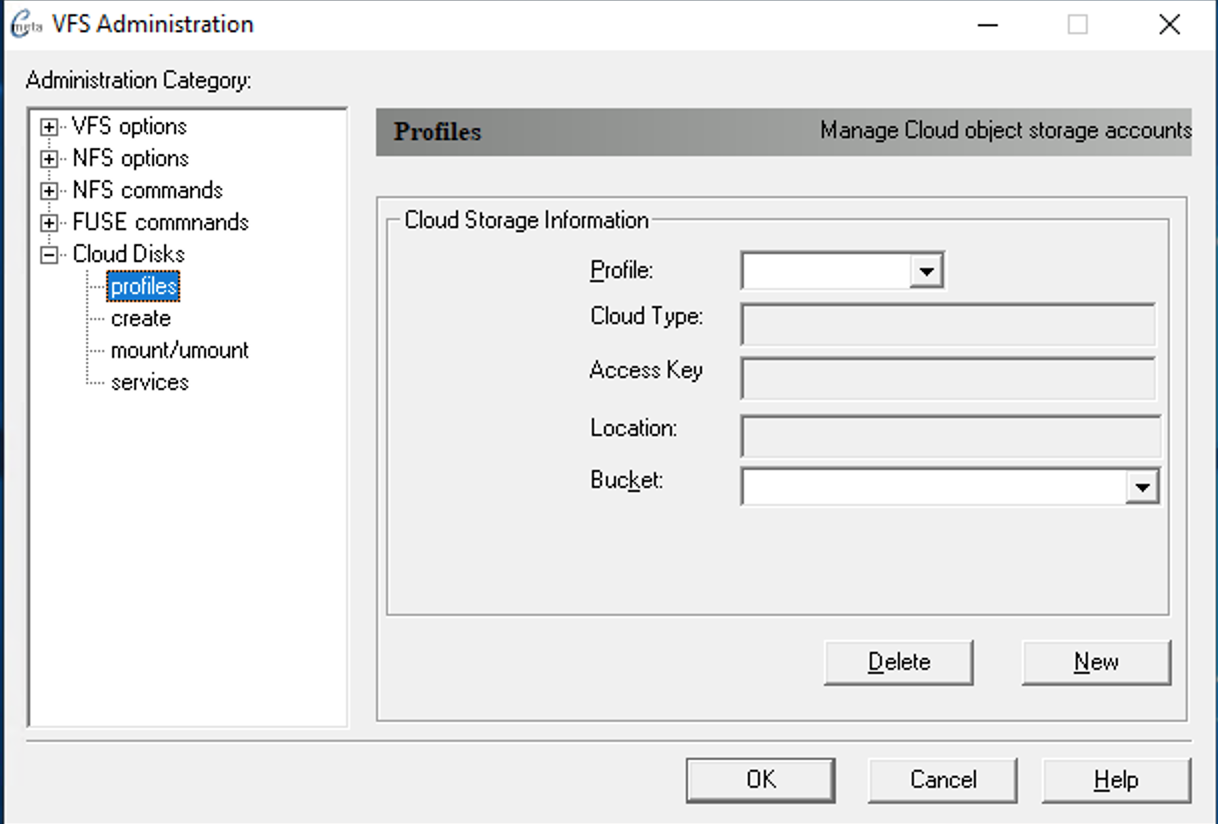
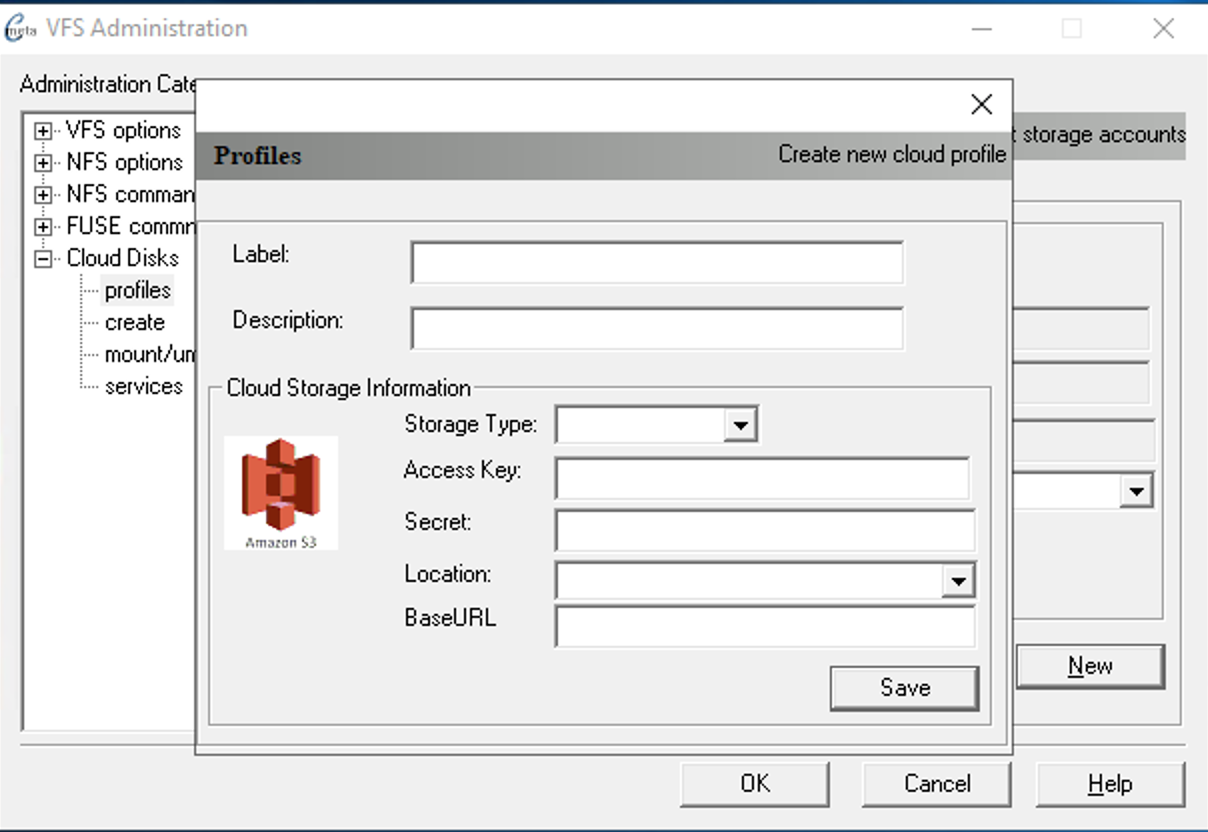
The following dialog shows how to configure cloud profile for Wasabi Technologies which comes under Other S3 generic category. In this configuration BaseURL is required to match their service URLs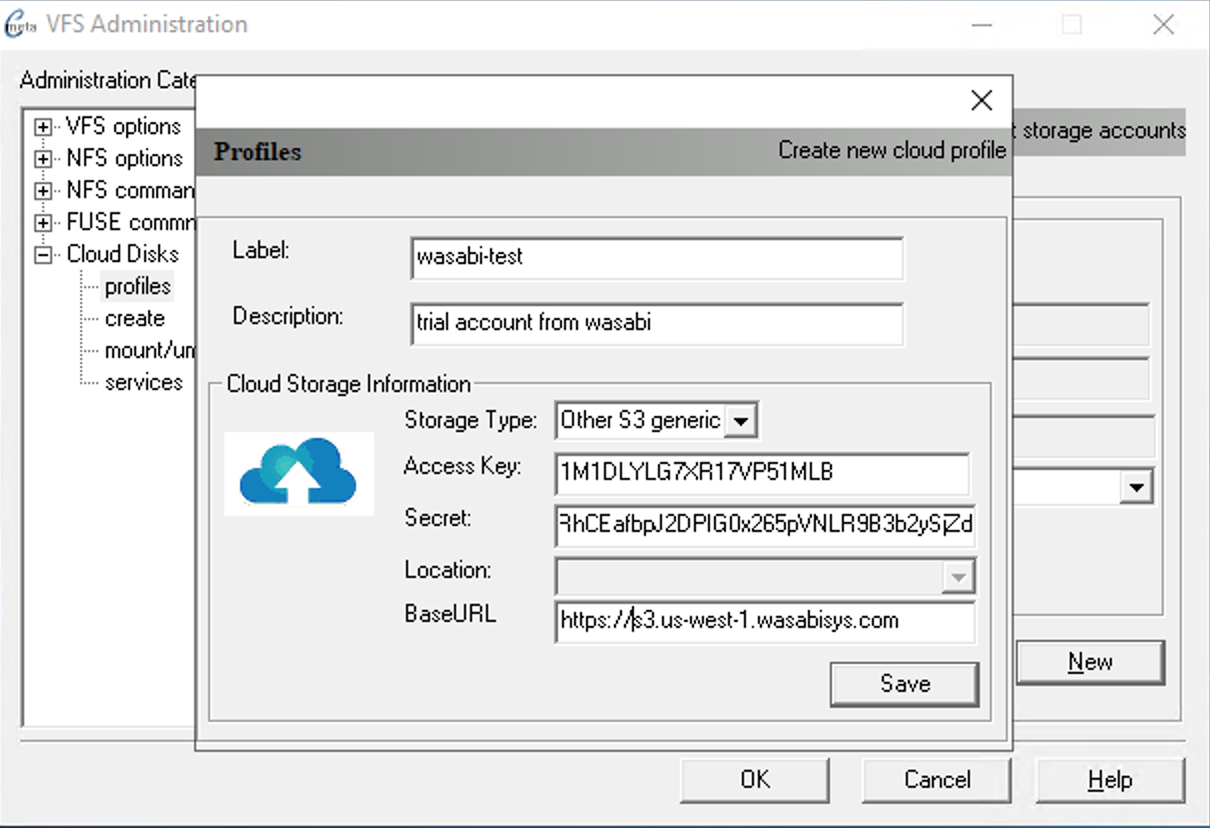
Once configured it will provide a list of bucket/container names that is currently present.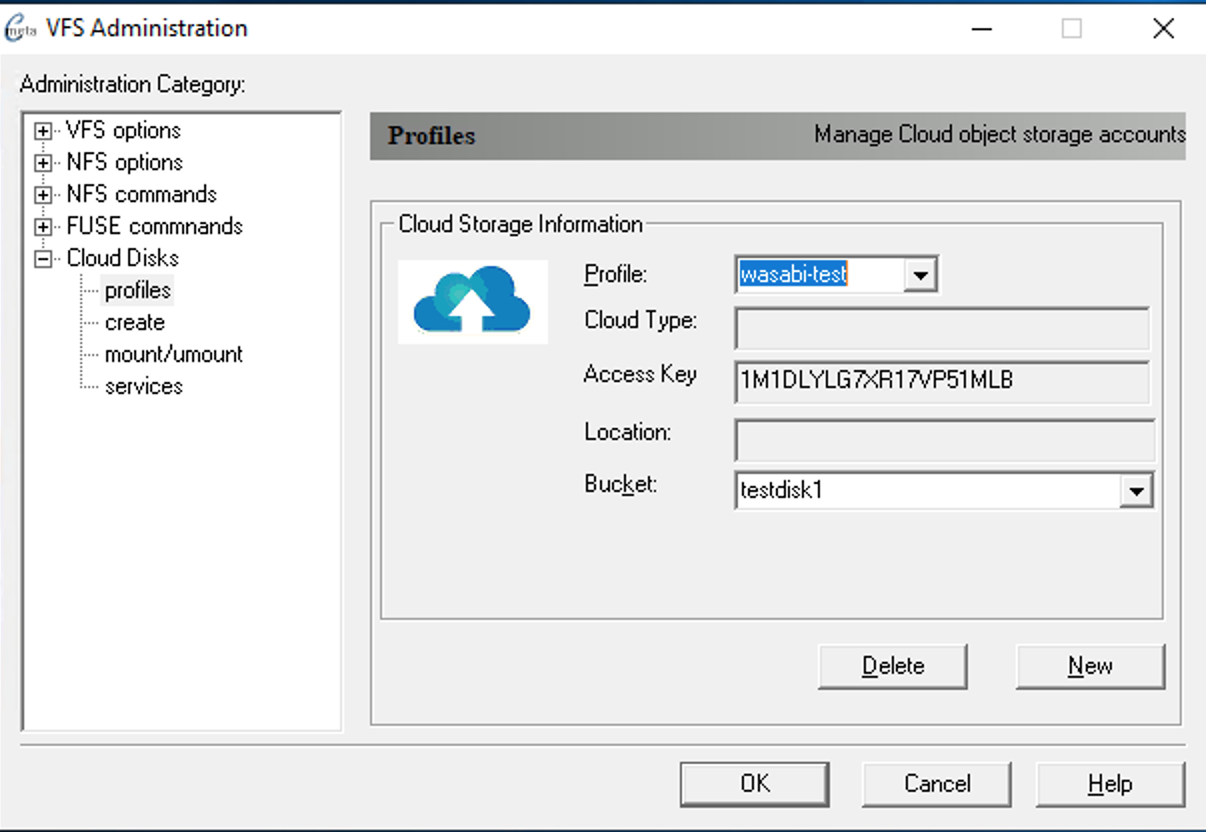
| Panel | |
|---|---|
On this page:
|
3. Configure your first object storage disk
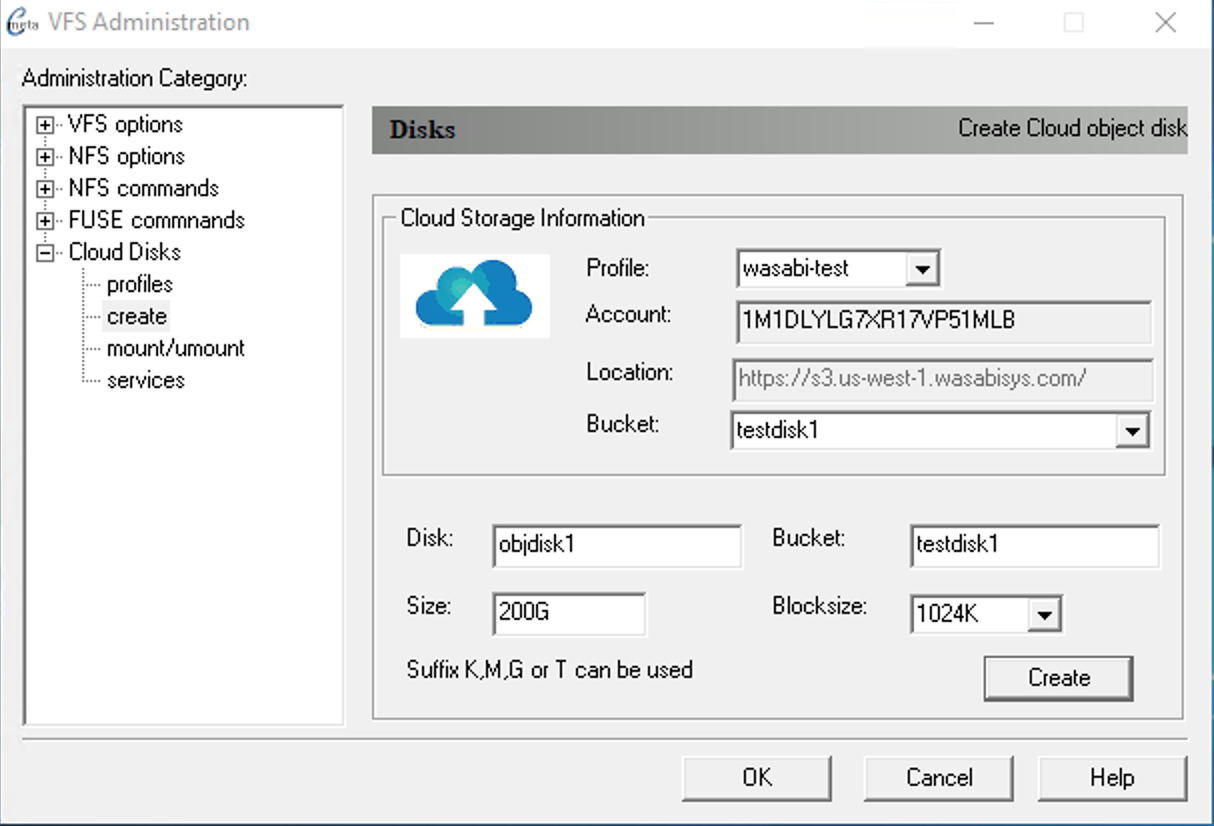
Select the cloud profile to use to create object storage disk. You can select an existing Bucket from the list or enter one manually which will create a new bucket for you. Logical size of VHDX up to 64TB allowed by Windows
--blockCacheSize=100 azure
google_s3
amazon_s3
Access URL for the object storage. Must be specified for all S3 object provider other than Amazon
Azure blobs contain the storage account name in the URL.
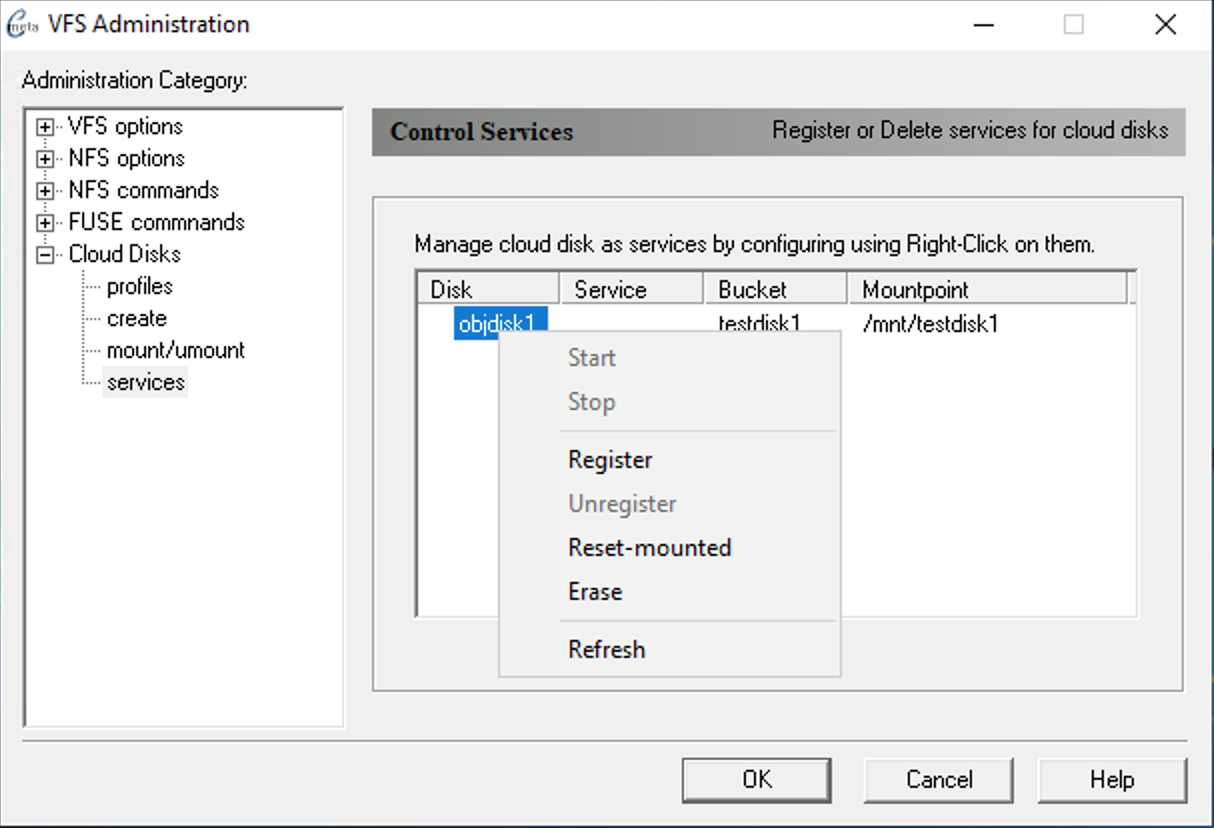
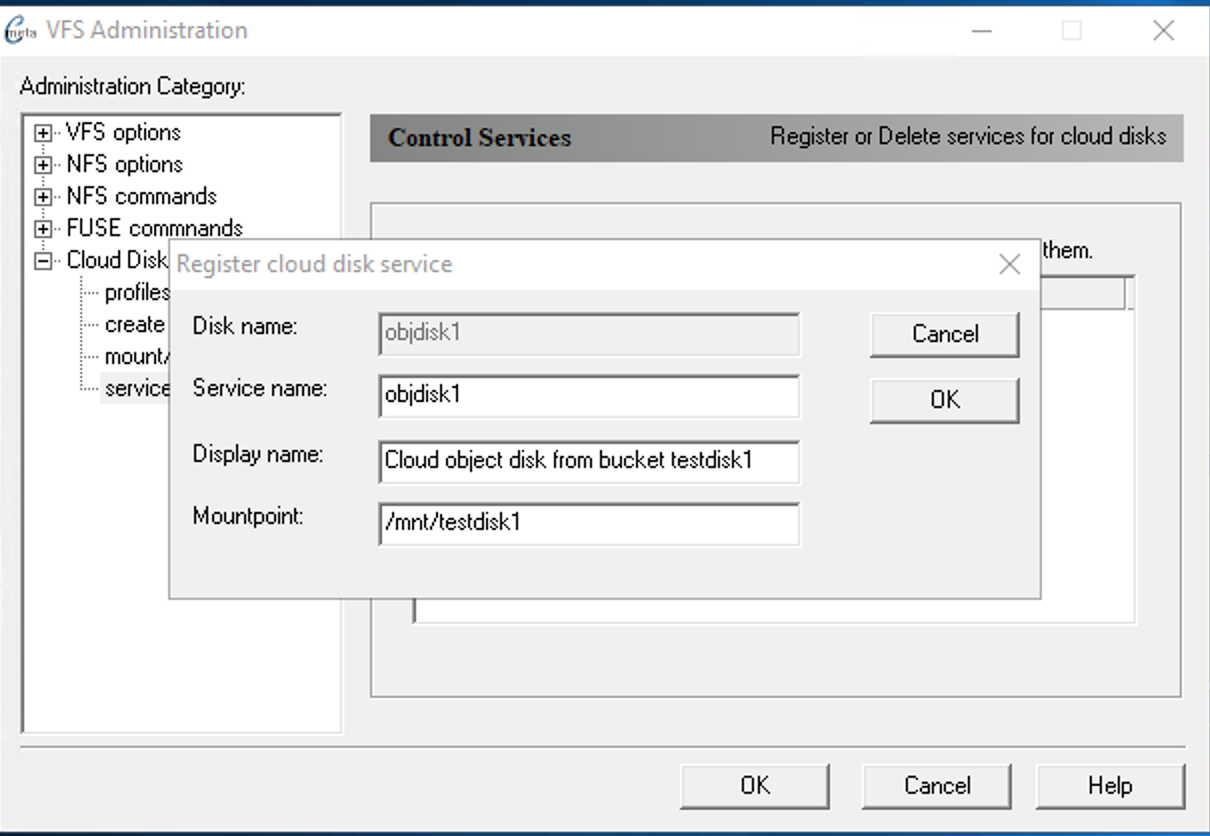
Once cloud disk was setup you can Register it as service program from the right-click popup menu.
Configure object storage as VHDX
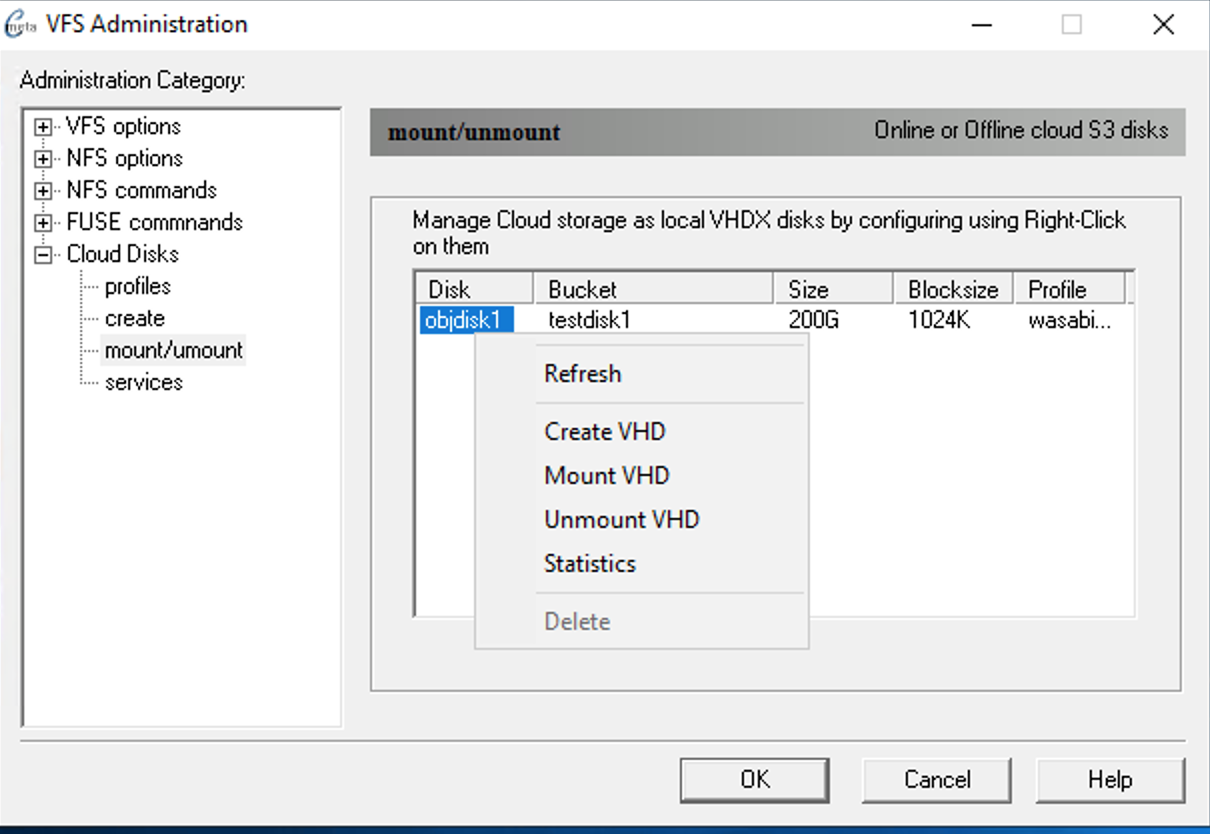
For Windows to make use of object storage bucket we have to initialize the object storage as VHDX image. VHDX is preferred over VHD because of inherent journal feature to protect against unsafe shutdown and also it can support up to 64TB for a single image.
Mount object storage bucket
For Windows to make use of object storage bucket we have to intialize the object storage as VHDX image. VHDX is preferred over VHD because of inherent journal feature to protect against unsafe shutdown and also it can support up to 64TB for a single image. This step is performed in foreground interactively to make sure it is working before configuring it as service later. In the following example object storage bucket smbtest1 is being mounted. Please make note of the -f option for foreground. Also for filename we chose as extension .vhdxCode Block title using bucket smbtest1 from Wasabi C:\Program Files\crossmeta>objbacker.exe --cacert=ca-bundle.crt --accessFile=/etc/.s3wasabi_passwd --authVersion=aws2 --baseURL=https://s3.us-west-1.wasabisys.com/ --directIO --noAutoDetect --size=10T --timeout=30 --blockCacheSize=100 --blockCacheThreads=8 --minWriteDelay=5000 --md5CacheSize=1000000 --ssl --blockSize=1024K -o no_pagecache --filename=file.vhdx smbtest1 /mnt -f objbacker.exe: auto-detection disabled; using configured block size 1m and file size 10t INFO: s3backer process 5312 for /mnt started INFO: mounting /mntCode Block title using bucket disk1 from Azure C:\Program Files\crossmeta>objbacker.exe --cacert=ca-bundle.crt --accessFile=/etc/.s3azure_passwd --s3Type=azure --baseURL=https://storageaccount.blob.core.windows.net/ --directIO --noAutoDetect --size=10T --timeout=30 --blockCacheSize=100 --blockCacheThreads=8 --minWriteDelay=5000 --md5CacheSize=1000000 --ssl --blockSize=1024K -o no_pagecache --filename=file.vhdx disk1 /mnt -f objbacker.exe: auto-detection disabled; using configured block size 1m and file size 10t INFO: s3backer process 5512 for /mnt started INFO: mounting /mnt
After the above command finishes the object storage is accessible as V:\mnt\file.vhdx as one giant file with logical capacity as 10TB.Code Block title qemu-img C:\Program Files\qemu>dir v:\mnt Volume in drive V is vfsroot Volume Serial Number is 0122-B5C1 Directory of v:\mnt 05/22/2019 07:48 PM <DIR> . 05/22/2019 07:48 PM <DIR> .. 05/22/2019 07:48 PM10,995,116,277,760 file.vhdx 05/22/2019 07:48 PM 1,422 stats 2 File(s) 10,995,116,279,182 bytes 2 Dir(s) 5,242,880 bytes free
Initialize VHDX on the object storage bucket using qemu-img program available in c:\program files\qemu
Verify VHDX informationCode Block title qemu-img cd c:\program files\qemu C:\Program Files\qemu> qemu-img create -f vhdx v:\mnt\file.vhdx 10T Formatting 'v:\mnt\file.vhdx', fmt=vhdx size=10995116277760 log_size=1048576 block_size=0Code Block title qemu-img c:\Program Files\qemu> qemu-img info v:\mnt\file.vhdx image: v:\mnt\file.vhdx file format: vhdx virtual size: 10T (10995116277760 bytes) disk size: 10T cluster_size: 33554432Activate VHDX file as virtual disk in Windows from Administrator PowerShell window
Code Block language powershell title Attach VHDX c:\users\Administrator> mount-diskimage -imagepath v:\mnt\file.vhdxwith Mount VHDX
- Launch diskmgmt.msc to initialize disk for the first time and assign a drive letter. You may create a file system within Disk Management GUI or from Command Prompt.
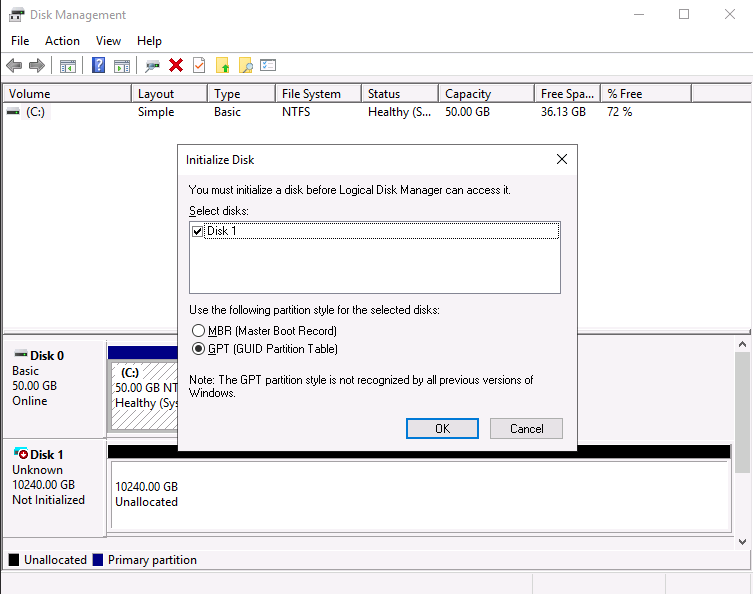
Create a file system NTFS or ReFS. Use the actual drive letter that was assigned from the above command and allocation size of 1MB is chosen to match with the block size used while configuring cloud disk.
Code Block language powershell title Format c:\users\Administrator> format /fs:ntfs /A:1M /q F:
Warning title NTFS allocation size Windows 2019 supports allocation size of 1MB for NTFS file systems while earlier version limited to 64KB only. This means NTFS created with 1MB allocation size may not be recognized by older Windows.
Detach the virtual disk
Code Block language powershell title Detach VHDX c:\users\Administrator> dismount-diskimage -imagepath v:\mnt\file.vhdxStop the objbaker program to proceed configuration as service
From Desktop → Crossmeta command shell running as administrator
Code Block language powershell title Stop objbaker V:\>mount /dev/loop0 on / type ufs (local, read-only) devfs on /dev type devfs (local) \fuse.chan3596 on /mnt type fuse V:\> umount /mntThe above command would stop the objbacker program that is running inside another Command Prompt Window.
4. Register as NT service
Create service using sc.exe
If everything worked out fine so far we are ready to make this object disk as service now. Pick a service name to start this object disk as NT service program automatically from now on. In this example we register objdisk1 as NT service program.
In the following command line for sc.exe please note that binPath= and displayName= has no space character before = but space character after =
Code Block language powershell title Create service C:\Program Files\crossmeta>sc create objdisk1 start= delayed-auto binpath="\"c:\program files\crossmeta\objbacker.exe\" --cacert=\"c:\program files\crossmeta\ca-bundle.crt\" --accessFile=/etc/.s3wasabi_passwd --baseURL=https://s3.us-west-1.wasabisys.com/ --directIO --noAutoDetect --size=10T --timeout=30 --blockCacheSize=100 --blockCacheThreads=8 --minWriteDelay=5000 --md5CacheSize=1000000 --ssl --blockSize=1024K -o no_pagecache --filename=file.vhdx smbtest1 /mnt" displayName= "My first object disk smbtest1 from Wasabi" depend= cxfuse [SC] CreateService SUCCESS C:\Program Files\crossmeta>sc qc objdisk1 [SC] QueryServiceConfig SUCCESS SERVICE_NAME: objdisk1 TYPE : 10 WIN32_OWN_PROCESS START_TYPE : 2 AUTO_START (DELAYED) ERROR_CONTROL : 1 NORMAL BINARY_PATH_NAME : "c:\program files\crossmeta\objbacker.exe" --cacert="c:\program files\crossmeta\ca-bundle.crt" --accessFile=/etc/.s3wasabi_passwd --baseURL=https://s3.us-west-1.wasabisys.com/ --directIO --noAutoDetect --size=10T --timeout=30 --blockCacheSize=100 --blockCacheThreads=8 --minWriteDelay=5000 --md5CacheSize=1000000 --ssl --blockSize=1024K -o no_pagecache --filename=file.vhdx smbtest1 /mnt LOAD_ORDER_GROUP : TAG : 0 DISPLAY_NAME : My first object disk smbtest1 from Wasabi DEPENDENCIES : cxfuse SERVICE_START_NAME : LocalSystem
| Code Block | ||||
|---|---|---|---|---|
| ||||
sc start objdisk1
powershell mount-diskimage -imagepath v:\mnt\file.vhdx |
Stopping the objdisk service
From Desktop → Crossmeta command shell running as administrator
| Code Block | ||||
|---|---|---|---|---|
| ||||
v:\> umount /mnt

v:\> sc stop objdisk1
|
5. Automatic Startup
Create startup script
To configure object disk every time the system boots up create a command batch file in c:\program files\crossmeta\s3disks.cmd and add the following to file assuming objdisk1 being the configured service name and /mnt as the mount point.| Code Block | ||||
|---|---|---|---|---|
| ||||
net start objdisk1
powershell mount-diskimage -imagepath v:\mnt\file.vhdx
|
Schedule the above as task
To run s3disks.cmd every time the Windows starts use schtasks.exe| Code Block | ||||
|---|---|---|---|---|
| ||||
schtasks.exe /create /tn "Start Cloud Disks" /ru SYSTEM /Sc ONSTART /tr
"\"C:\program files\s3disks.cmd\""
|
| Info |
|---|
Note how quote characters were escaped while specifying the command line argument to schtasks.exe, since the directory pathname contains space character. |
Related pages